Karungali Mala Guide: Meaning, Wear, Care
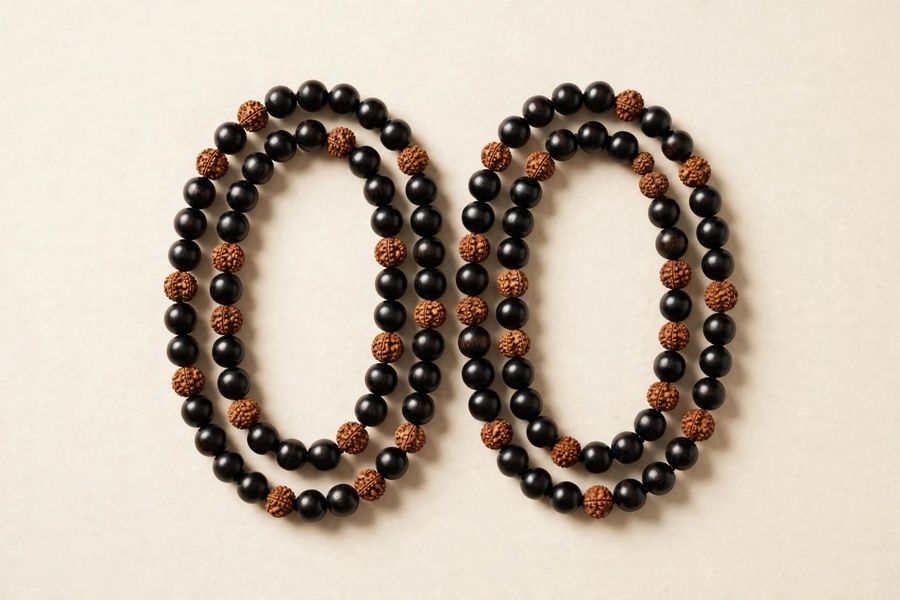
How do you know the karungali mala you are buying is genuine ebony rather than an imitation? That is the first question this guide answers. Karungali is the Tamil name for ebony wood, traditionally used in malas and worn for protection in South Indian practice. This guide covers the combination mala — 14mm karungali beads with 5mm rudraksha, listed at ₹799 — and how to assess a real one before you buy. The protection is a traditional association, not a tested effect, and the wood needs care: keep it from water, perfume and chemicals, and expect the thread to wear with use.
| What karungali is | Ebony wood, the Tamil tradition's name for it |
|---|---|
| This mala | Karungali + rudraksha, 14mm and 5mm beads |
| Price | ₹799, MRP ₹1,700 struck (−53%), inclusive of all taxes |
| Certificate | Rudra Sacred Certificate of Authenticity card included — the shop's own card, not a lab certificate |
| Care | Keep away from water, perfume and chemicals |
| Dispatch & delivery | Dispatch 1–2 working days; delivery usually 3–7 working days across India |
| Payment | Prepaid online or COD with ₹49 advance |
| Energising | Every item cleansed and energised as per tradition before dispatch, included free |
| If you are choosing by | Look at | Why |
|---|---|---|
| Daily wearing, kept simple | Karungali Mala — Rudraksh Combination | 14mm ebony with 5mm rudraksha, ₹799 |
| A metal accent between sections | Karungali Cap Mala — Silver Cap | The same 14mm ebony and rudraksha, finished with silver-tone caps, ₹899 |
| Mantra counting first | Rudraksh Mala — 109 Beads | 109 knotted rudraksha beads made for japa, ₹999 |
| A single-material wood mala | The pure-ebony form (a separate product) | Solid ebony beads only, no rudraksha — a different product from the combination mala |
What is karungali?
Karungali is the traditional Tamil name for Diospyros ebenum, commonly known as ebony wood. It is a dense, dark heartwood, heavy in the hand, deep brown to near-black with fine grain lines visible under direct light. In Tamil heritage the karungali tree is regarded as a sacred tree, associated in tradition with strength, grounding and endurance.
In traditional South Indian practice, karungali wood is carved into deity icons, temple fittings and personal prayer beads. Tradition holds that ebony carries protective associations, which is why it is a preferred material for a mala. Items carved from karungali are valued for their stability and resistance to decay, which tradition reads symbolically as unwavering resolve.
Worn as a mala, karungali connects the wearer to that regional reverence. In traditional South Indian belief, wearing ebony wood close to the skin is treated as a symbol of protection and a reminder of quiet personal stability. The wood needs no dye or heavy varnish; its surface polishes with handling and develops a gentle sheen over time.
What is the Karungali and Rudraksha combination mala?
The Karungali Mala — Rudraksh Combination unites two devotional materials in one mala: 14mm karungali (ebony wood) beads with 5mm rudraksha beads. The classic mala form is 108 beads plus the Meru or guru bead that marks the start and return point of a round of japa — check the product page for this mala's exact bead count. The contrast is the point: smooth, heavy ebony against the textured ridges of the small rudraksha seeds, a rhythm you can feel as the mala moves through the fingers.
In traditional belief, the pairing unites the protective grounding traditionally associated with ebony wood with the meditative focus attributed to rudraksha seeds. That is a traditional reading, not a measured effect, and this guide states it as such. The listing is exact about what you receive: one karungali and rudraksha combination mala, 14mm and 5mm beads, listed at ₹799 against an MRP of ₹1,700.
For a metal accent, the shop also lists the Karungali Cap Mala — Silver Cap at ₹899 (MRP ₹1,400): the same 14mm ebony and rudraksha, finished with silver-tone caps between the sections, which frame the dark wood and hold the segments in place.
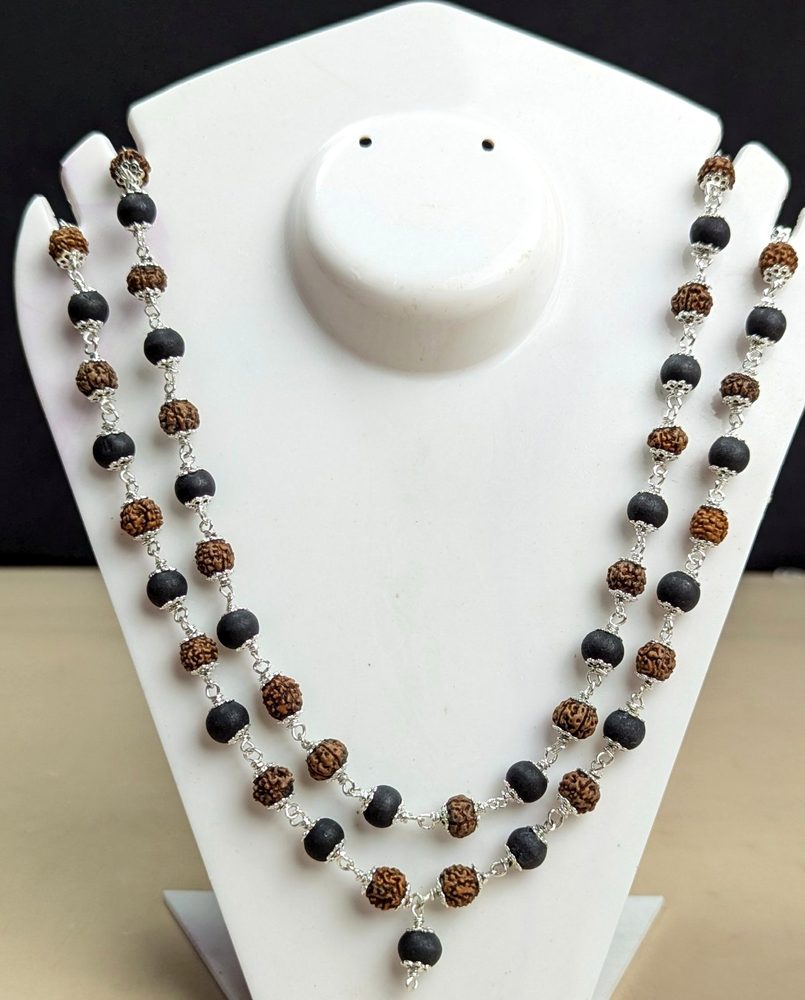
A pure-ebony mala — solid dark wood beads with no rudraksha — is a separate product, not this mala; if you want only wood, check that listing on its own terms. And if mantra counting is the whole purpose, the Rudraksh Mala — 109 Beads at ₹999 is 109 knotted rudraksha seeds made for japa.
To learn how mukhi lines are counted on a real bead — and how 5 mukhi, the most widely worn count, is worn and cared for — see the 5 Mukhi Rudraksha Guide: Wear, Count, Care.
| Mala | Beads | Price |
|---|---|---|
| Karungali Mala — Rudraksh Combination | 14mm karungali + 5mm rudraksha | ₹799 (MRP ₹1,700) |
| Karungali Cap Mala — Silver Cap | 14mm karungali + rudraksha, silver-tone caps | ₹899 (MRP ₹1,400) |
| Rudraksh Mala — 109 Beads | 109 knotted rudraksha beads | ₹999 (MRP ₹1,700) |
Who wears a karungali mala?
In traditional South Indian practice, wearing a karungali mala is open to anyone, without restriction by gender, age, background or birth chart. Unlike gemstone prescriptions that depend on a chart, tradition treats natural wood and seed malas as general items for focus and daily devotion. Householders, students, commuters and seasoned practitioners wear them alike — under modern clothing or over traditional dress, at morning prayer, at festivals and at temple visits.
No planetary consultation is needed before wearing one, in the traditional view; the requirements tradition names are intention, respect for the object, and attention to care. That is also the honest limit of the claim: the mala is worn as a symbol and a focus, and no wearing rule in this guide invents a restriction the tradition does not state.
How can you assess a karungali mala at home?
Check the grain first. Genuine ebony shows fine wood grain — subtle streaks of dark brown, charcoal and deep black — visible under bright light, varying from bead to bead. A bead that is perfectly uniform, identical to every other bead, with no grain at all, should prompt a question: natural wood does not come out identical, and neither does a natural seed.
Then check the numbers. Measure the beads with a ruler — about 14mm for the ebony beads and 5mm for the rudraksha — and count the strand, comparing it with the bead count stated on the product page (the classic form is 108 beads plus the guru bead). Hold the mala in your hand: genuine ebony feels dense and solid, not light or hollow. And ask the seller for clear photos of the actual mala you will receive, not stock images; the grain in the photo is the grain you should be able to find on arrival.
Natural variation is not a defect. Small differences in colour, size and markings from bead to bead are expected in natural materials, and the product page says so before you buy. What is a fault is a different item: a different bead size by several millimetres, a different count, or a different material. That is a wrong item — report it with your order number within 48 hours of delivery.
These checks can help you assess the material — grain, weight and measurements are useful clues — but appearance, weight and bead count alone cannot conclusively authenticate ebony, and they are not laboratory proof of species or authenticity. Rudra Sacred includes its own Certificate of Authenticity card with this mala; this is a seller-issued document, not third-party laboratory verification.
How do you wear and care for a karungali mala?
Wear it through the day if you like, and take it off for bathing, swimming and the gym. Water swells natural wood over time, which can weaken the thread and crack the beads; perfume, soap and chemicals dull the surface and dry the wood. Put the mala on after grooming, once perfume and lotions have dried on the skin.
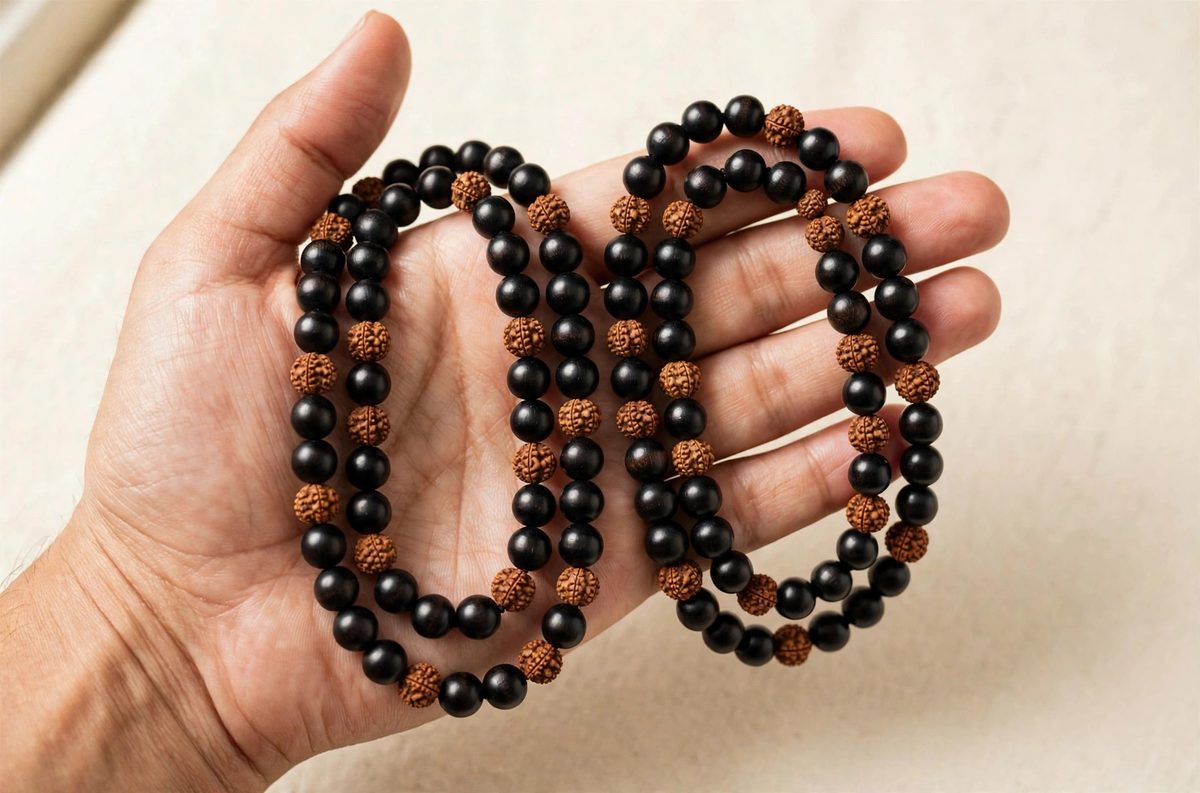
Store it flat in a cloth pouch or a wooden box, away from direct sunlight, heat and damp. Thread and elastic wear with daily use and will need replacing in time — that is normal maintenance, not a defect, and any local jeweller can re-string it. A natural bead darkens slightly with wear and handling; that change is expected.
Avoid applying oil unless the product seller specifically recommends a compatible wood conditioner. Keep the routine simple: dry, away from chemicals, and stored flat. That is the whole of the care the mala needs.
What a karungali mala does not do
A transit date is not a promise, and neither is a mala. In South Indian tradition, karungali is revered for its association with protection, grounding and discipline — but those associations are matters of faith and cultural symbolism, not scientifically proven effects or guaranteed outcomes. Wearing the mala does not guarantee wealth, success, or any life result; it does not diagnose, treat or prevent any illness; and it does not neutralise planetary transits or alter astrological cycles.
The mala is a focus for attention and devotion, not a substitute for medical care, financial planning or practical action. Approached that way — with realistic expectations and respect for the object — it is what the tradition says it is: a piece of South Indian spiritual heritage, honestly made and honestly described.
Before you buy any karungali mala, run these checks. Look for fine wood grain that varies from bead to bead under bright light; measure the beads (about 14mm ebony, 5mm rudraksha) and count the strand against the count on the product page; feel the weight in your hand — genuine ebony is dense, not light or hollow. Ask for photos of the actual mala, and treat perfectly uniform beads with suspicion.
Every Karungali Mala from Rudra Sacred ships with a Rudra Sacred Certificate of Authenticity card, which states the mala was checked, cleansed and energised as per tradition before dispatch. This is the shop's own card — it records the shop's traditional preparation. Rudra Sacred does not claim third-party laboratory testing or lab certificates for natural wood and seed malas. Natural variation in colour, size and markings is normal and is not a defect.
Products in this guide
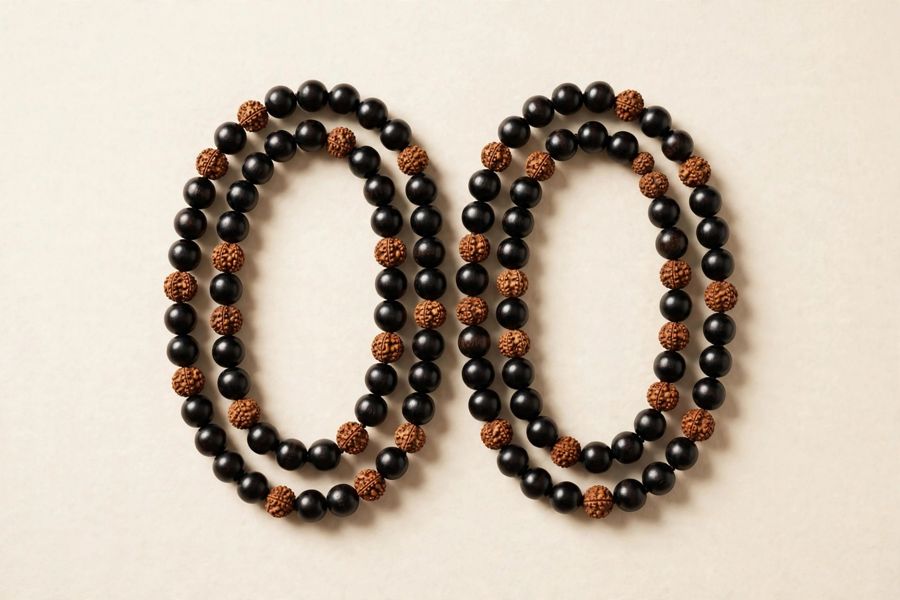
Karungali Mala — Rudraksh Combination
A combination mala of karungali (ebony wood) and rudraksha beads, 14mm and 5mm.
Karungali Cap Mala — Silver Cap
Karungali and rudraksha mala with silver caps, 14mm beads.
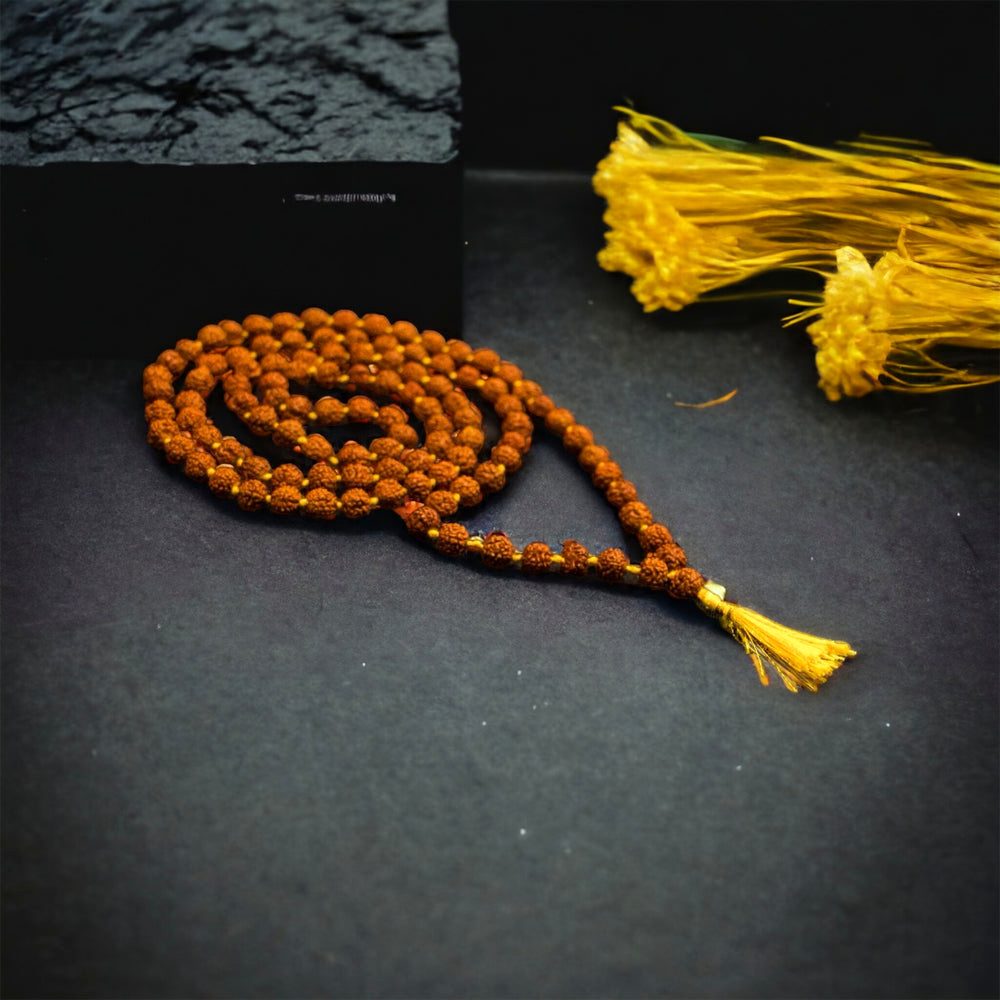
Rudraksh Mala — 109 Beads
A knotted rudraksha mala with 109 beads for japa and prayer.
What do buyers ask us?
What is karungali?
Karungali is the traditional Tamil name for ebony wood (Diospyros ebenum), used in South Indian tradition for temple items, sacred icons and prayer malas.
How is karungali different from rudraksha?
Karungali is a dense hardwood from the heartwood of the ebony tree; rudraksha is the dried seed of the Elaeocarpus ganitrus tree. This combination mala pairs 14mm ebony beads with 5mm rudraksha seeds, so one mala carries both traditions.
Who can wear a karungali mala?
In traditional South Indian practice, anyone can wear one, regardless of gender, age, background or birth chart. Tradition names no restrictive rule for natural wood malas; intention, respect and care are what it asks for.
How can I identify real karungali at home?
Look for natural wood grain under bright light, feel the dense weight in your hand, measure the beads (14mm ebony, 5mm rudraksha) and count the strand against the count on the product page. Natural variation from bead to bead is normal; perfectly uniform beads with no grain are the warning sign.
What does the Karungali Mala cost?
The Karungali Mala — Rudraksh Combination is listed at ₹799 against an MRP of ₹1,700, inclusive of all taxes. The silver-cap form is listed at ₹899. Prices are as published on 17 November 2026 — check the product page for the current price.
Does the mala come with a certificate?
Yes. Every Karungali Mala ships with a Rudra Sacred Certificate of Authenticity card stating it was checked, cleansed and energised as per tradition before dispatch. It is the shop's own card; Rudra Sacred does not claim third-party laboratory certificates.
Product and policy pages, read 17 November 2026: the Karungali Mala — Rudraksh Combination page (₹799, MRP ₹1,700, 14mm and 5mm), the Karungali Cap Mala — Silver Cap page (₹899, MRP ₹1,400, 14mm, silver-tone caps) and the Rudraksh Mala — 109 Beads page (₹999, MRP ₹1,700). Certificate wording is quoted from the Rudra Sacred Certificate of Authenticity card for this mala.
Disclaimer: Prices, dispatch and delivery times are as published on 17 November 2026; check the linked page for the current price and terms before you order. Traditional associations are matters of belief, not tested effects; no mala is presented here as a treatment, cure, or guarantee of protection, health, wealth, or any other outcome.
Explore Karungali Mala — ₹799 Compare the Silver Cap version — ₹899
More product education on the Rudra Sacred blog. For astrology and festival guides, see the separate Astro Sacred blog at astrosacred.store.