5 Mukhi Rudraksha Guide: Wear, Count, Care
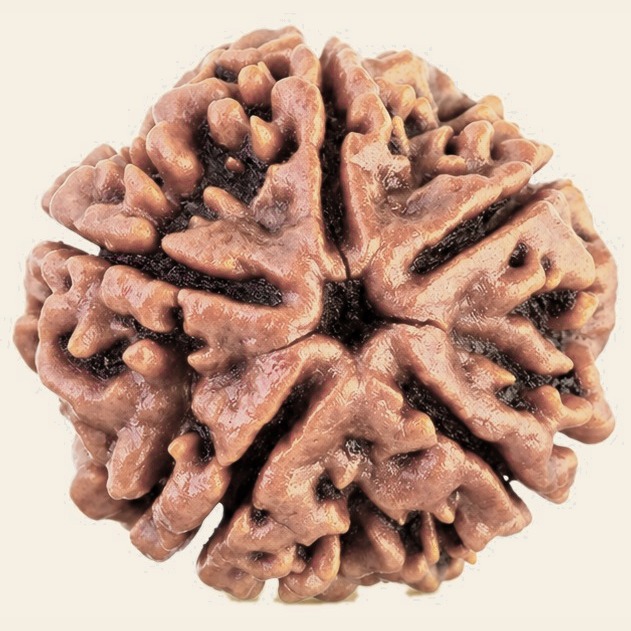
Who can wear 5 mukhi rudraksha — and how do you know the bead in your hand really has five mukhi? Those are the two questions this guide answers. Five mukhi is the most widely worn rudraksha: a natural seed with five lines, or faces, running from one end to the other. Tradition links it with general wellbeing and a calm mind, and with the deity Kalagni Rudra (Shiva) and the planet Jupiter. This guide covers the three 5 mukhi listings on Rudra Sacred — the single bead at ₹841, the bead bracelet at ₹499, and the bracelet with a Buddha charm at ₹499 — and how to count the lines on a real bead honestly, including what counting alone cannot prove.
| What 5 mukhi is | A natural rudraksha seed with five mukhi lines on its surface |
|---|---|
| Traditional associations | Deity Kalagni Rudra (Shiva); planet Jupiter — belief, not tested effect |
| Single bead | 5 Mukhi Rudraksha, ₹841, MRP ₹1,999 — one natural bead |
| Bead bracelet | 5 Mukhi Rudraksha Bead Bracelet, ₹499, MRP ₹1,999 |
| Buddha-charm bracelet | 5 Mukhi Rudraksha Bracelet with Buddha Charm, ₹499, MRP ₹1,999 |
| Certificate | No authenticity certificate is included with the single bead |
| Care | Keep away from water, perfume and chemicals; thread and elastic wear over time is normal wear |
| Dispatch & delivery | Dispatch within 1–2 working days; delivery usually 3–7 working days across India |
| Payment | Prepaid online or COD with ₹49 advance |
| Energising | Every order is cleansed and energised as per tradition before dispatch, included free |
| If you want | Listing | Price |
|---|---|---|
| One natural bead, to wear on a thread or keep in the puja space | 5 Mukhi Rudraksha | ₹841 (MRP ₹1,999) |
| A bracelet of 5 mukhi beads for daily wear | 5 Mukhi Rudraksha Bead Bracelet | ₹499 (MRP ₹1,999) |
| The same bracelet with a Buddha charm, a symbol of peace | 5 Mukhi Rudraksha Bracelet with Buddha Charm | ₹499 (MRP ₹1,999) |
What does 5 mukhi mean?
Mukhi means face. A rudraksha bead is the dried seed of the Elaeocarpus ganitrus tree, and the lines that run down its natural surface divide it into faces. A bead with five such lines is a 5 mukhi bead. The lines are counted on the natural surface of the bead — that is how the product page describes it, and it is the only counting method this guide uses.
Five mukhi is the most widely worn mukhi. In tradition it is linked with general wellbeing and a calm mind, and it is the mukhi most often recommended as a first rudraksha, because tradition treats it as a general-wear bead rather than a chart-specific one. That is a traditional reading, not a measured effect, and this guide states it as such.
The traditional associations listed on the product page are the deity Kalagni Rudra (Shiva) and the planet Jupiter. Devotees who connect with that deity and planet choose this mukhi in the tradition; others wear it for the calm and meditation association alone. Either way, the association is a matter of belief.
What is the single bead, and what is the bracelet?
The 5 Mukhi Rudraksha is one natural rudraksha bead, listed at ₹841 against an MRP of ₹1,999. It is worn on the body or kept in the puja space; many wear rudraksha on a thread or in a mala. What you receive is exactly that: one natural bead. Natural materials vary slightly in colour, size and markings — that variation is normal and is not a defect, as the product page says before you buy.
The 5 Mukhi Rudraksha Bead Bracelet is a bracelet of 5 mukhi rudraksha beads, listed at ₹499 against an MRP of ₹1,999. In tradition, 5 mukhi rudraksha is the most widely worn mukhi, associated with calm and meditation, and many people wear it during prayer or meditation as a reminder of that intention. It is a bracelet for daily wear; the mala for japa is a separate listing, the Rudraksh Mala — 109 Beads.
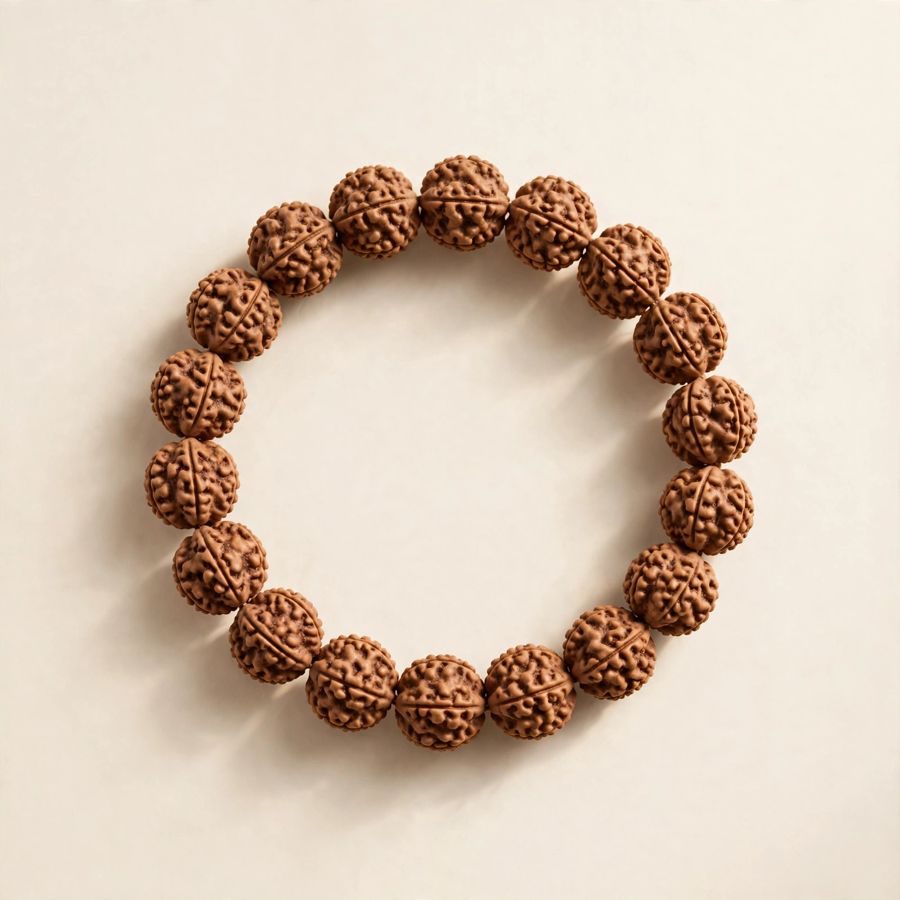
The 5 Mukhi Rudraksha Bracelet with Buddha Charm is the same bracelet at the same ₹499, with a Buddha charm added. In tradition, 5 mukhi rudraksha is associated with calm and meditation, and the Buddha charm is a symbol of peace in daily wear. If the charm is what you want, this is the listing; if you want the plain bracelet, the other listing is the same beads without it.
Who can wear 5 mukhi?
In tradition, anyone can wear 5 mukhi. It is treated as a general-wear bead, not a chart-gated one: tradition names no restriction by gender, age, background or birth chart for it, and no planetary consultation is needed before wearing one in the traditional view. Householders, students, commuters and seasoned practitioners wear it alike — under modern clothing or over traditional dress, at morning prayer, at festivals and at temple visits.
That is also the honest limit of the claim. The requirements tradition names are intention, respect for the object, and attention to care. This guide invents no restriction the tradition does not state, and it does not present a general-wear item as if it needed a chart to wear. If a seller tells you that 5 mukhi is forbidden to you without a chart reading, that is their rule, not the tradition this guide describes.
How do you count mukhi lines honestly?
Hold the bead under bright light and turn it slowly. The mukhi lines are the grooves that run from the top of the seed to the bottom, dividing the surface into faces. Count each groove that runs the full length of the bead, from one end to the other. A 5 mukhi bead has five such lines, and five faces between them.
Three things to look for. First, the lines should follow the natural shape of the seed — they curve with it, they are not drawn on, and they are not perfectly identical to each other. Second, the faces between the lines should be roughly similar in width, but not exactly equal; natural seeds are not machined, and small differences from face to face are expected. Third, check the ends of the bead: the lines should meet near the top and bottom of the seed, not stop halfway down.
Natural variation is not a defect. Small differences in colour, size and markings from bead to bead are expected in natural materials, and the product page says so before you buy. What is a fault is a different item: a different mukhi count from the one listed, a bead that is not rudraksha at all, or a bead with lines that are carved or painted on. That is a wrong item — report it with your order number within 48 hours of delivery.
And here is the part that matters most: counting lines alone cannot prove a bead is genuine. Appearance, weight and a line count are useful clues, but they are not laboratory proof of species or authenticity, and no home check can conclusively authenticate a rudraksha bead. Be wary of any seller who claims a line count alone proves genuineness.
One more plain fact, stated on the product page itself: no authenticity certificate is included with the single 5 mukhi bead. Rudra Sacred does not claim a laboratory certificate for it. Buy it for what the listing says it is — one natural 5 mukhi rudraksha bead, checked, cleansed and energised as per tradition before dispatch — and not for a certificate it does not carry.
5 mukhi vs 4 and 6 mukhi
The mukhi number is the count, and each count carries its own traditional associations on the store. Only the associations the store itself lists are given here; nothing is invented.
The 4 and 6 mukhi beads are separate single-bead listings, each with its own page and price — check those pages for the current price; this guide does not quote them, because the point of the comparison is the association, not a price contest. If you are choosing between them, choose by the tradition you connect with, not by a claim that one mukhi is stronger than another: no such ranking is stated on the store, and this guide makes none. The wider range, from 1 to 14 mukhi and Gauri Shankar, is covered in the Rudraksha Mukhi Guide; that guide is education, not a stock list — check each listing's page for current availability and price.
| Mukhi | Deity (traditional association) | Planet (traditional association) |
|---|---|---|
| 4 mukhi | Brahma | Mercury |
| 5 mukhi | Kalagni Rudra (Shiva) | Jupiter |
| 6 mukhi | Kartikeya | Venus |
How do you wear and care for 5 mukhi?
Wear the bracelet through the day if you like, and take it off for bathing, swimming and the gym. The single bead, worn on a thread or in a mala, follows the same rule. Water swells natural seed and weakens thread over time; perfume, soap and chemicals dull the surface. Put the bead or bracelet on after grooming, once perfume and lotions have dried on the skin.
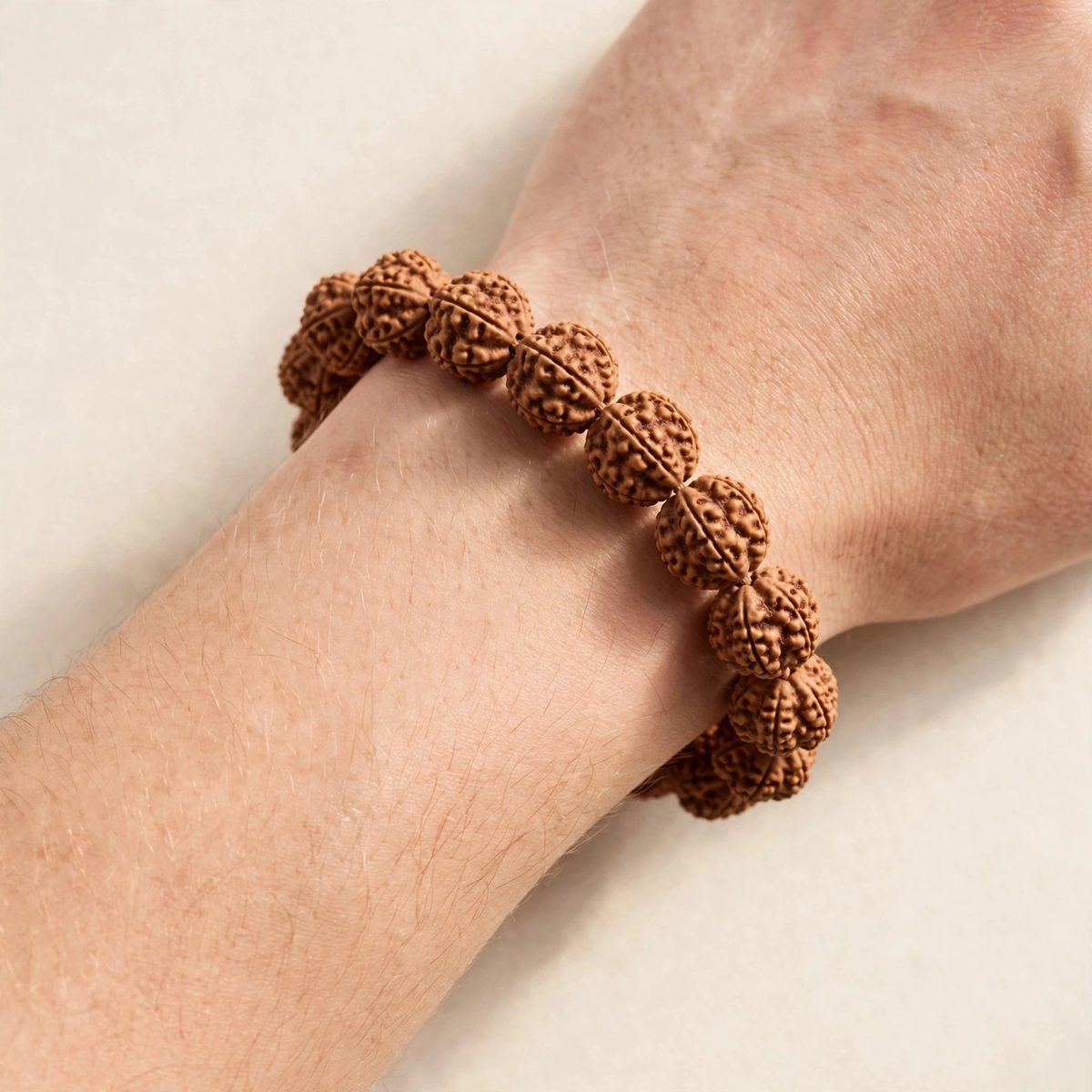
Store it flat in a cloth pouch or a wooden box, away from direct sunlight, heat and damp. Thread and elastic wear with daily use and will need replacing in time — that is normal maintenance, not a defect, and any local jeweller can re-string a bracelet or mala. A natural bead darkens slightly with wear and handling; that change is expected.
Keep the routine simple: dry, away from chemicals, and stored flat. That is the whole of the care the bead needs. If you keep it in the puja space rather than wearing it, the same rules apply — dry, away from perfume and incense smoke settling on it, and handled with clean hands.
What 5 mukhi does not do
A rudraksha bead is a focus for attention and devotion, not a substitute for medical care, financial planning or practical action. In tradition, 5 mukhi is linked with general wellbeing and a calm mind — but those associations are matters of faith and cultural symbolism, not scientifically proven effects or guaranteed outcomes. Wearing it does not guarantee wealth, success, or any life result; it does not diagnose, treat or prevent any illness; and it does not neutralise planetary transits or alter astrological cycles.
Approached that way — with realistic expectations and respect for the object — it is what the tradition says it is: the most widely worn rudraksha, honestly made and honestly described.
Before you buy, run these checks. Count the grooves that run the full length of the bead, from one end to the other, under bright light — a 5 mukhi bead has five such lines. The lines should follow the natural shape of the seed, not look drawn on; the faces between them are roughly similar, never exactly equal. Natural variation in colour, size and markings from bead to bead is normal and is not a defect.
Counting lines alone cannot prove a bead is genuine: appearance, weight and a line count are useful clues, but they are not laboratory proof of species or authenticity, and no home check can conclusively authenticate a rudraksha bead. No authenticity certificate is included with the single 5 mukhi bead, as the product page states. Rudra Sacred does not claim a laboratory certificate for it; buy it for what the listing says it is — one natural 5 mukhi rudraksha bead, checked, cleansed and energised as per tradition before dispatch.
Products in this guide
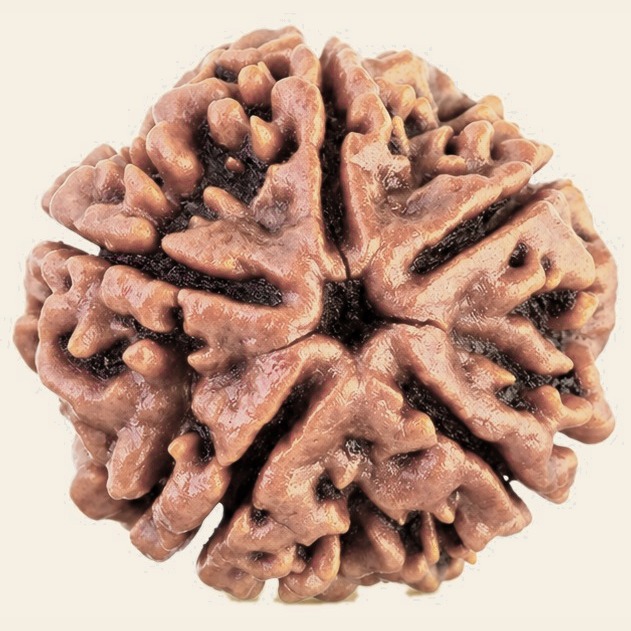
5 Mukhi Rudraksha
The most widely worn mukhi; tradition links it with general wellbeing and a calm mind.
5 Mukhi Rudraksha Bead Bracelet
A bracelet of 5 mukhi rudraksha beads.
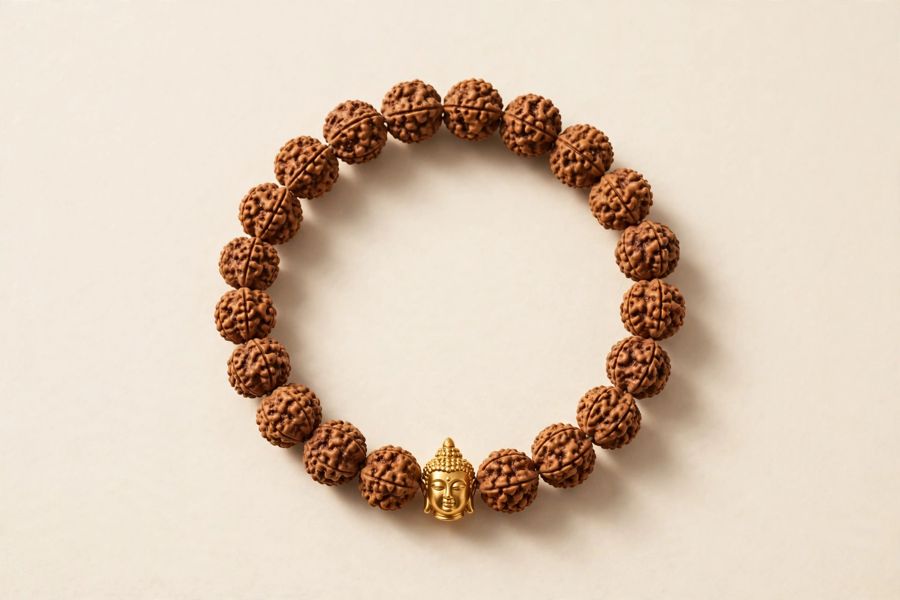
5 Mukhi Rudraksha Bracelet with Buddha Charm
5 mukhi rudraksha beads with a Buddha charm.
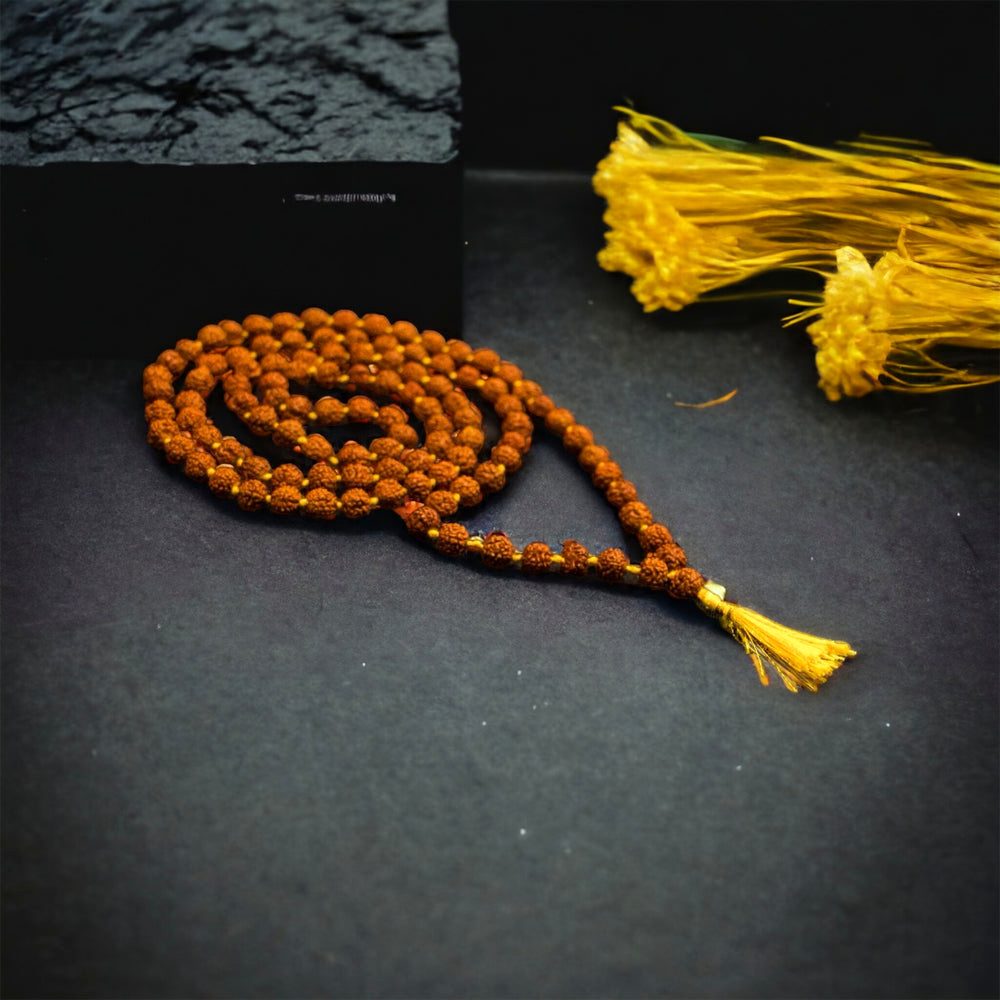
Rudraksh Mala — 109 Beads
A knotted rudraksha mala with 109 beads for japa and prayer.
What do buyers ask us?
What is 5 mukhi rudraksha?
A natural rudraksha seed with five lines, or faces, on its surface. It is the most widely worn mukhi, traditionally linked with general wellbeing and a calm mind.
Who can wear 5 mukhi rudraksha?
In tradition, anyone can wear it, regardless of gender, age, background or birth chart. Tradition names no restrictive rule for this mukhi; intention, respect and care are what it asks for.
How do I count mukhi lines on a real bead?
Count the grooves that run the full length of the bead, from one end to the other, on the natural surface, under bright light. A 5 mukhi bead has five such lines. Natural variation from face to face is normal; lines that stop halfway, or look carved or painted on, are warning signs.
Can counting lines alone prove a bead is genuine?
No. Appearance, weight and a line count are useful clues, but they are not laboratory proof of species or authenticity, and no home check can conclusively authenticate a rudraksha bead.
What does 5 mukhi rudraksha cost?
The single natural bead is listed at ₹841 against an MRP of ₹1,999. The bead bracelet and the Buddha-charm bracelet are each listed at ₹499 against an MRP of ₹1,999. Prices are as published on 21 November 2026 — check the product page for the current price.
Does the bead come with a certificate?
No. The product page states that no authenticity certificate is included with the single 5 mukhi bead. Rudra Sacred does not claim a laboratory certificate for it.
What is the difference between 5 mukhi and 4 or 6 mukhi?
Only the traditional associations differ on the store: 4 mukhi is linked with Brahma and Mercury, 5 mukhi with Kalagni Rudra (Shiva) and Jupiter, and 6 mukhi with Kartikeya and Venus. Each is a separate listing with its own price.
Product pages, read live 20 November 2026 and re-verified 21 November 2026: the 5 Mukhi Rudraksha bead page (₹841, MRP ₹1,999, deity Kalagni Rudra / Shiva, planet Jupiter, one natural bead, "Mukhi lines counted on the natural surface of the bead", "No authenticity certificate is included with this bead"); the 5 Mukhi Rudraksha Bead Bracelet page (₹499, MRP ₹1,999, calm and meditation association); the 5 Mukhi Rudraksha Bracelet with Buddha Charm page (₹499, MRP ₹1,999, Buddha charm a symbol of peace); the 4 Mukhi page (deity Brahma, planet Mercury) and 6 Mukhi page (deity Kartikeya, planet Venus) for the comparison table only — their prices are not quoted here. Care, dispatch (1–2 working days), delivery (usually 3–7 working days), COD ₹49 advance and free energising are as stated on the product pages. The Rudraksh Mala — 109 Beads price (₹999) re-verified live 21 November 2026.
Disclaimer: Prices, dispatch and delivery times are as published on 21 November 2026; check the linked page for the current price and terms before you order. Traditional associations are matters of belief, not tested effects; no bead is presented here as a treatment, cure, or guarantee of wellbeing, calm, wealth, or any other outcome.
Explore 5 Mukhi Rudraksha — ₹841 Compare the bead bracelet — ₹499
More product education on the Rudra Sacred blog. For astrology and festival guides, see the separate Astro Sacred blog at astrosacred.store.