Rudraksha Mukhi Guide (1–14 + Gauri Shankar)
A mukhi is one face of a rudraksha bead, counted by the lines running from its top to its base. In tradition, each count is linked with a deity and a planet, and buyers choose by it. The count records the bead's form and rarity, not strength — price follows rarity. No study links a mukhi count to life outcomes.
| What a mukhi is | One natural face (segment) of a rudraksha bead, read from its surface lines |
|---|---|
| How it is counted | Count the natural lines running from the top of the bead to the base |
| Range in this guide | 1 to 14 Mukhi, plus Gauri Shankar — two beads joined naturally |
| Bead material | Natural rudraksha seed (Elaeocarpus ganitrus) |
| What sets the price | How rare the natural form is — not any strength or effect |
| Evidence note | Deity and planet links are traditional associations; no scientific evidence links a mukhi count to life outcomes |
| If you are choosing by | Look at | Why |
|---|---|---|
| A first bead, kept simple | 5 Mukhi | The most widely worn mukhi in tradition, readily available as single beads, malas and bracelets |
| A planet association | The mukhi whose graha matches, in the table below | Buyers who follow jyotish usually choose by the planet link recorded in tradition |
| A deity association | The mukhi whose deity matches, in the table below | Devotees often choose by the deity they worship |
| Rarity, or a joined form | 1 Mukhi, or Gauri Shankar | The rarest single form, and the naturally joined pair — both priced by scarcity |
What does mukhi actually mean?
Mukhi is the count of natural faces on a rudraksha bead. The faces are separated by lines, called clefts, that run from the top of the bead to its base, and the count of those lines is the mukhi. A bead with five clear lines is a 5 Mukhi; a bead with one unbroken face is a 1 Mukhi.
The count is a fact of the seed's natural growth, like the segments of a fruit. Natural beads are not perfectly uniform: size, colour and the depth of the lines vary from bead to bead, and that variation is one sign of a natural seed rather than a manufactured copy.
Which mukhi is linked with which deity and planet?
Traditional lists link each mukhi with a ruling deity and a graha (planet). The full list is in the table at the end of this guide: it runs from 1 Mukhi (Shiva, Sun) through 14 Mukhi (Shiva and Hanuman, Saturn and Mars), with Gauri Shankar — two beads joined as one — linked with Shiva and Parvati and the Moon.
These links are tradition, recorded in texts and teaching lineages, and lists differ slightly between sources. They are given here so a buyer can follow the same reasoning the tradition uses.
Does a higher mukhi mean a stronger bead?
No. Nothing in the traditional lists ranks one mukhi as stronger than another in a measurable way, and no study has found that a bead's line count changes anything for the wearer. What does change with the count is rarity: some forms grow far less often than others, and the market prices that scarcity.
That is why, in our own range, a 5 Mukhi bead is listed at a modest price while a Gauri Shankar — two seeds fused naturally, which is uncommon — is listed far higher. The price gap records how hard each form is to source, and a buyer should read it that way, not as a scale of power. Our range stops at 14 Mukhi: beads described as 15, 18, 21 or 23 Mukhi are not stocked here, and a listing that offers a rare count at a common-bead price should be checked with the same care as any rare form.
How do you count the lines on a real bead?
Hold the bead to a bright light and count the lines that run unbroken from the top of the bead to the base, turning the bead slowly. On a natural bead the lines are grooves in the surface, uneven in depth. Lines that look scratched on, evenly spaced and identical all the way round are a warning sign of a carved copy.
For Gauri Shankar, check that the two beads share one natural body — a joined pair grows as a single piece, while a fake is two beads glued together, and a glued join usually shows a seam or a difference in colour at the join. Before buying any higher mukhi, ask for clear close photos of the actual bead.
Which mukhi should a first-time buyer start with?
Most first-time buyers start with 5 Mukhi: in tradition it is the most widely worn, it is available as single beads, malas and bracelets, and its price is modest because the form is common. If you are choosing by jyotish or by devotion instead, use this three-question shortlist to narrow the range before you spend anything.
One: are you choosing by a planet, by a deity, or simply for a first bead? Two: will you wear it daily, or keep it for puja? Three: what is your budget, knowing that price follows rarity? A planet or deity answer points to one or two rows of the table below; a first-bead answer points to 5 Mukhi; and the budget answer rules out the rare forms honestly rather than by disappointment later.
How do you care for a rudraksha bead?
Keep the bead dry and away from perfume, soap and chemicals, which dull the surface. Many wearers oil a bead occasionally with a plain oil, as a customary practice to stop the seed drying out; wipe off the excess. Store the bead or mala in a cloth pouch, not loose in a drawer.
Thread and elastic wear with daily use and will need replacing in time — that is normal maintenance, not a defect. A natural bead darkens slightly with wear and handling; that change is expected and is not damage.
| 1 Mukhi | Shiva · Sun — listed at ₹4,999 |
|---|---|
| 2 Mukhi | Shiva-Parvati (Ardhanarishvara) · Moon — listed at ₹751 |
| 3 Mukhi | Agni · Mars — listed at ₹751 |
| 4 Mukhi | Brahma · Mercury — listed at ₹751 |
| 5 Mukhi | Kalagni Rudra · Jupiter — listed at ₹841 |
| 6 Mukhi | Kartikeya · Venus — listed at ₹751 |
| 7 Mukhi | Mahalakshmi · Saturn — listed at ₹999 |
| 8 Mukhi | Ganesha · Rahu — listed at ₹1,101 |
| 9 Mukhi | Nav Durga · Ketu — listed at ₹771 |
| 10 Mukhi | Vishnu · Jupiter — listed at ₹999 |
| 11 Mukhi | Hanuman · Mars — listed at ₹3,999 |
| 12 Mukhi | Surya-Vishnu · Sun — listed at ₹3,999 |
| 13 Mukhi | Indra and Kamadeva · Venus — listed at ₹3,999 |
| 14 Mukhi | Shiva and Hanuman · Saturn and Mars — listed at ₹4,999 |
| Gauri Shankar | Shiva-Parvati · Moon — two beads joined naturally — listed at ₹14,999 |
Before you buy any mukhi, run these checks. Count the lines yourself from clear photos: natural lines are grooves of uneven depth, while carved lines look scratched and too regular. Check a Gauri Shankar for a glue seam. Treat perfectly uniform, identical beads sold as rare natural forms with suspicion — nature does not produce identical seeds.
No authenticity certificate is included unless a product page says so, and natural variation in size and markings is normal. The price differences between mukhis reflect sourcing rarity, as this guide explains.
Products in this guide
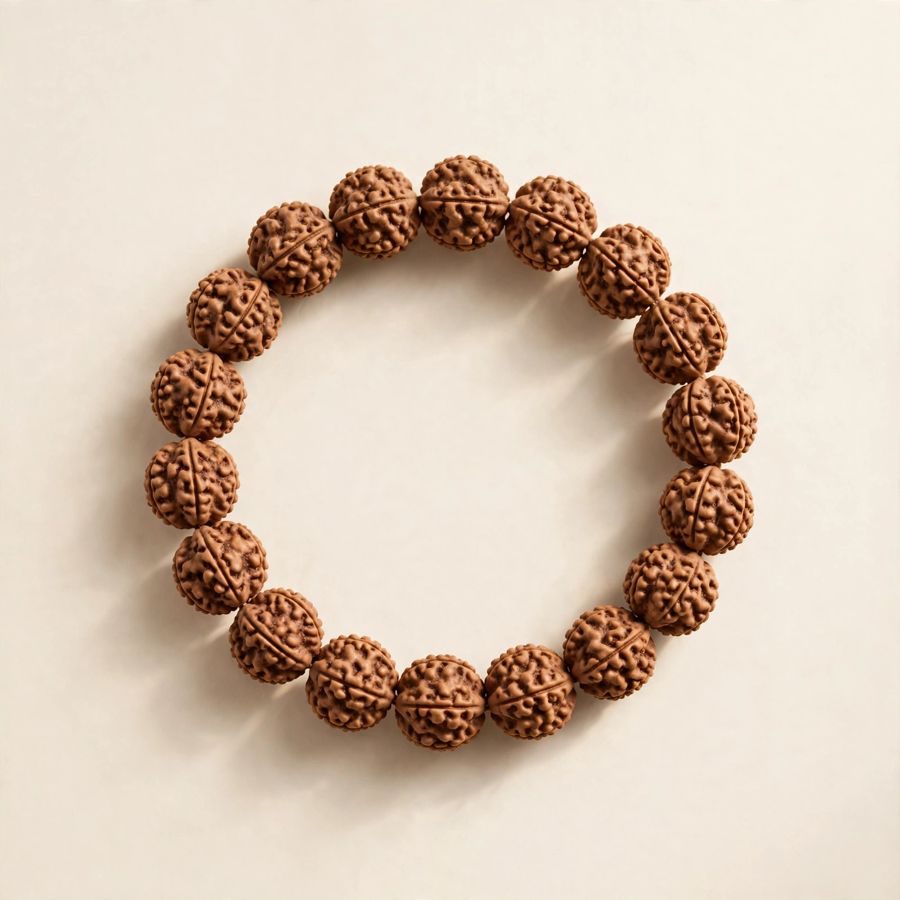
5 Mukhi Rudraksha Bead Bracelet
A bracelet of 5 mukhi rudraksha beads.
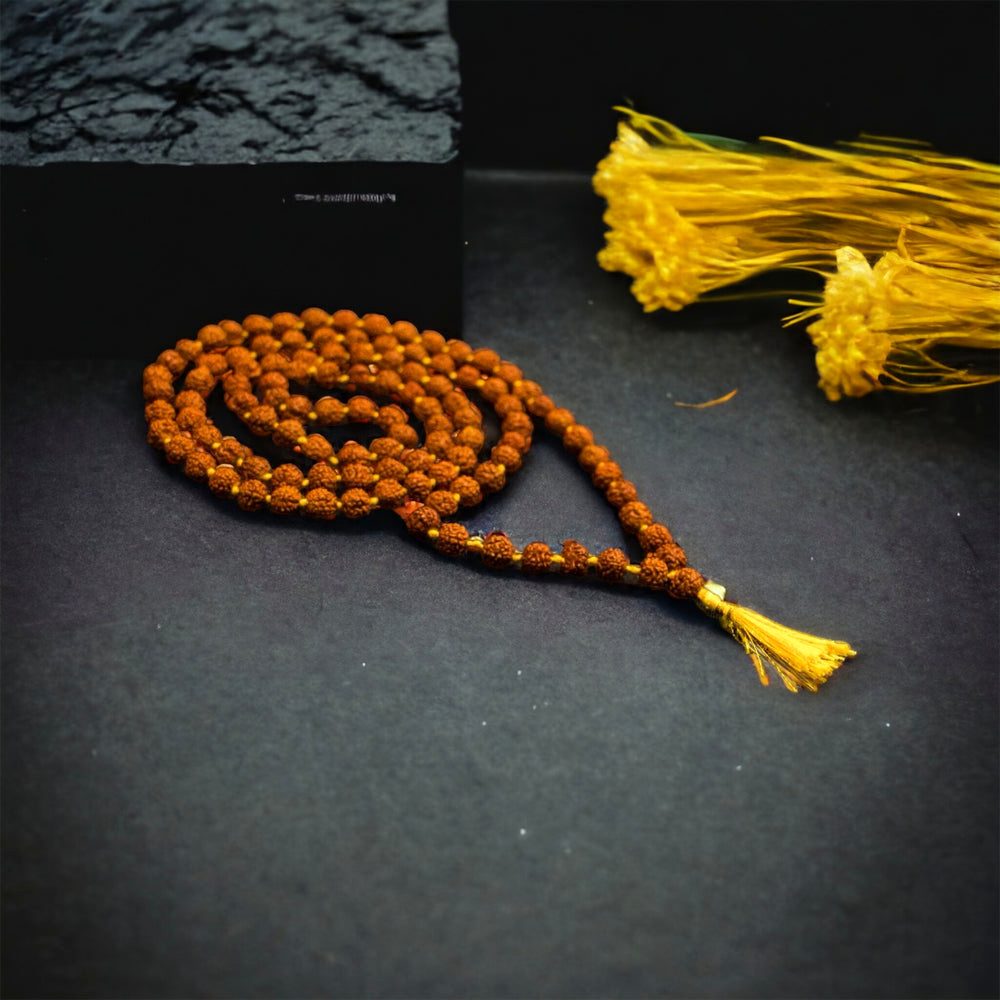
Rudraksh Mala — 109 Beads
A knotted rudraksha mala with 109 beads for japa and prayer.
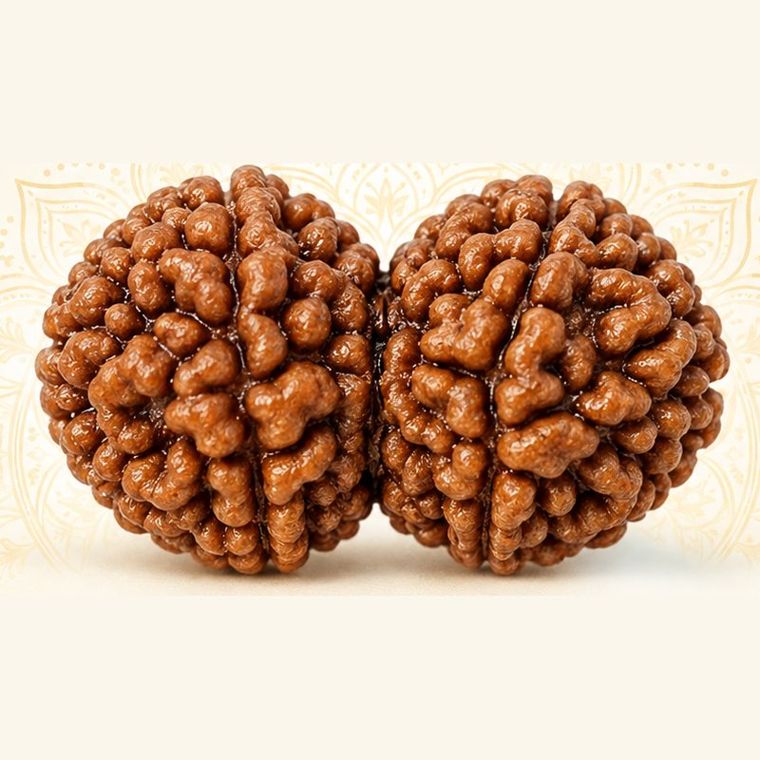
Gauri Shankar Rudraksha
Two rudraksha beads naturally joined as one — tradition reads it as Shiva and Parvati together, a symbol of union and harmony.
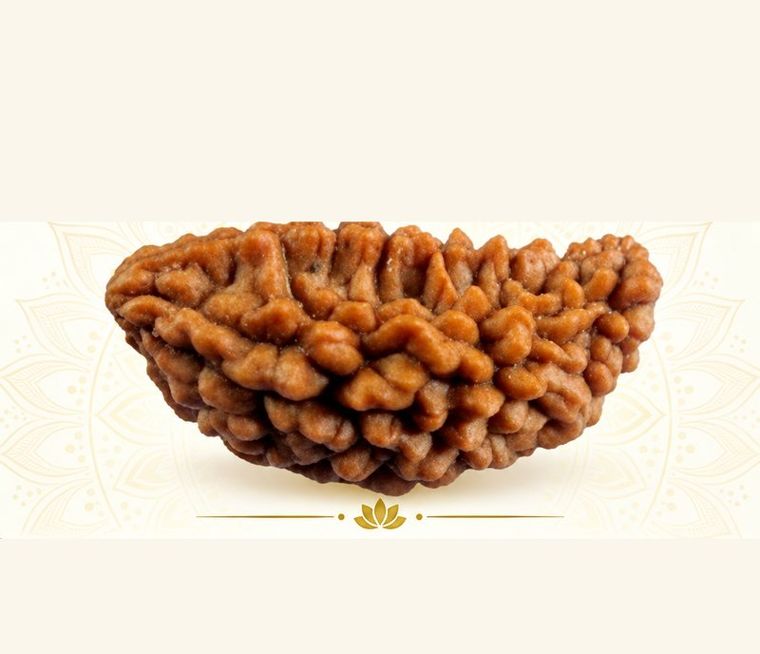
1 Mukhi Rudraksha
The rarest form in the tradition, linked with focus and self-realisation; the genuine bead is half-moon shaped.
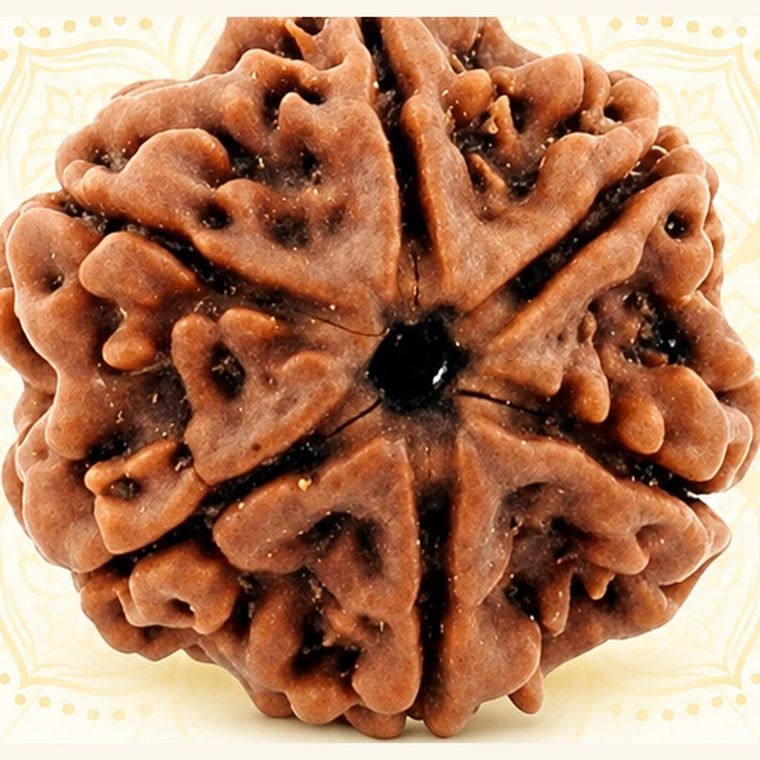
6 Mukhi Rudraksha
Traditionally linked with willpower, focus and staying grounded.
What do buyers ask us?
Will wearing a particular mukhi change my luck or income?
No. The deity and planet links are traditional associations, and no evidence shows that a bead changes luck, income or any other outcome. Buy a mukhi for its traditional meaning and as a natural object you value, not as a mechanism for results.
Is 1 Mukhi the most powerful mukhi?
No — it is among the rarest, which is a different thing. Its price follows scarcity. Traditional lists give each mukhi its own association; they do not set up a league table of power.
Can mukhi lines be faked?
Yes. Lines can be carved onto a plain bead, and joined beads can be glued. Uneven natural grooves, seller photos of the actual bead, and a visible natural join on Gauri Shankar are the checks available to a buyer; this guide's authenticity section lists them.
Do your mukhi beads come with a certificate?
No certificate is included unless the product page says so.
Why do prices vary so much between mukhis?
Because the forms grow at very different rates. Common forms like 5 Mukhi are inexpensive; rare forms and the naturally joined Gauri Shankar take far longer to source, and the listed prices record that difference.
Deity and planet associations follow the traditional mukhi lists as recorded in the Shiva Purana tradition and the Rudraksha Jabala Upanishad tradition; lists differ slightly between texts and teachers, and where they differ we follow the list shown in the table and say so.
More product education on the Rudra Sacred blog. For astrology and festival guides, see the separate Astro Sacred blog at astrosacred.store.