Pyrite Tortoise Guide: Placement & Care
A pyrite tortoise pairs the tortoise — a symbol of stability and long life linked to Kurma — with pyrite, a brass-coloured mineral — iron sulfide, Mohs 6–6.5. Vastu practice keeps it in a room's north, facing inward. Vastu is a traditional system, not a tested income predictor, and pyrite tarnishes in damp — keep it dry.
| Material | Pyrite — iron sulfide, a natural metallic mineral |
|---|---|
| Hardness | 6 to 6.5 on the Mohs scale |
| The symbol | The tortoise — stability, patience, long life; linked with Kurma, the tortoise avatar of Vishnu |
| Traditional placement | North or north-west of a room or shop, head facing into the room |
| Care in one line | Keep dry; wipe with a dry cloth; never wash or keep in water |
| Tarnish | Pyrite dulls in humid air — a known behaviour of the mineral, managed by dry storage |
| Evidence note | Placement rules are traditional guidelines within vastu, a traditional design system |
| If you place it | Direction and finish | Why / note |
|---|---|---|
| In a living room | North side, head facing into the room | The inward-facing position is the traditional one — the symbol is kept facing the household, not the door |
| On a work desk or in an office | North corner of the desk or room, facing you | Kept dry and out of the way of water bottles and plants, which raise local humidity |
| In a shop | Near the counter on the north side, facing into the shop | A display and symbol position; keep it where customers do not handle it daily |
| In a humid room — bathroom, kitchen, balcony | Choose another room instead | Steam and damp tarnish pyrite faster than any other placement; the mineral decides this, not tradition |
Why a tortoise, in tradition?
The tortoise is one of the oldest auspicious symbols in Indian tradition. It stands for stability, patience and long life — a creature that carries its shelter with it and is in no hurry. In the Puranic account, Vishnu takes the form of Kurma, the great tortoise, and bears Mount Mandara on his back during the churning of the ocean; the tortoise is the foundation that does not move.
A tortoise figure in a home or shop is kept with that symbolism in mind: steady foundations, slow and lasting progress. That is the whole of the claim, stated properly — it is a symbol within a tradition, chosen by people who value what it represents.
What is pyrite, and why does it tarnish?
Pyrite is a natural mineral of iron and sulfur with a brass-yellow metallic shine — the stone sometimes nicknamed fool's gold, though it is harder and more brittle than gold and is a mineral in its own right. At Mohs 6 to 6.5 it is firm enough for a carved figure, and its weight in the hand is one way to recognise it: a pyrite tortoise feels noticeably heavy for its size.
Pyrite's weakness is moisture. In damp air its surface slowly oxidises and dulls, and in a wet place it can develop a rusty film. This is chemistry, not a quality failure — but it dictates the care rules: keep the piece dry, and never follow the live-tortoise custom of a water plate with a pyrite figure.
Which direction should it face — and where do traditions differ?
The common vastu guideline is to place the tortoise in the north, or north-west, of the room with its head facing inward, toward the people in the room. North is traditionally associated with water and with Kuber in the vastu scheme, which is why tortoise figures so often end up there.
Practice differs between households: some keep tortoise figures near the entrance, some in the puja space, and metal tortoises are sometimes set on a plate — with water added for live-symbolism in a few customs. For a pyrite piece the material overrules the custom: no water, ever. Where your family practice and the standard guideline differ, follow your family practice for direction, and the mineral's rule for dryness.
Where should you not keep a pyrite tortoise?
Not in a bathroom, not beside a kitchen sink or stove, and not on an open balcony in the monsoon. All three are humidity traps, and humidity is what dulls pyrite. Also avoid keeping it loose in a drawer with metal objects that will scratch its carved shell.
A dry shelf, desk corner or puja space in a lived-in room is the right environment. If your home is humid overall — coastal air, a damp season — store the piece in a closed cabinet or box when it is not on display, which slows tarnish considerably.
How do you clean pyrite without damaging it?
Dry methods only: a soft dry cloth for dust, a soft dry brush for the carving's grooves. If the shine has dulled, a barely-dry microfibre cloth buffed gently is the limit of safe cleaning at home. Do not use water, vinegar, lemon, or metal polish — acids and abrasives attack the mineral's surface.
Handle the tortoise with dry hands when you can; the oils and moisture from daily handling add up over months. Kept dry and dusted, a pyrite figure holds its metallic colour for years.
Before you buy a pyrite tortoise anywhere, pick it up — or ask its weight. Real pyrite is heavy for its size and cool to the touch; painted resin copies are light and warm. Look at the shine: pyrite has a grainy, crystalline metallic surface, not a smooth gold paint. A brassy, too-even gold coating is the usual sign of a copy.
Tarnish from humid keeping is a property of pyrite itself.
Products in this guide
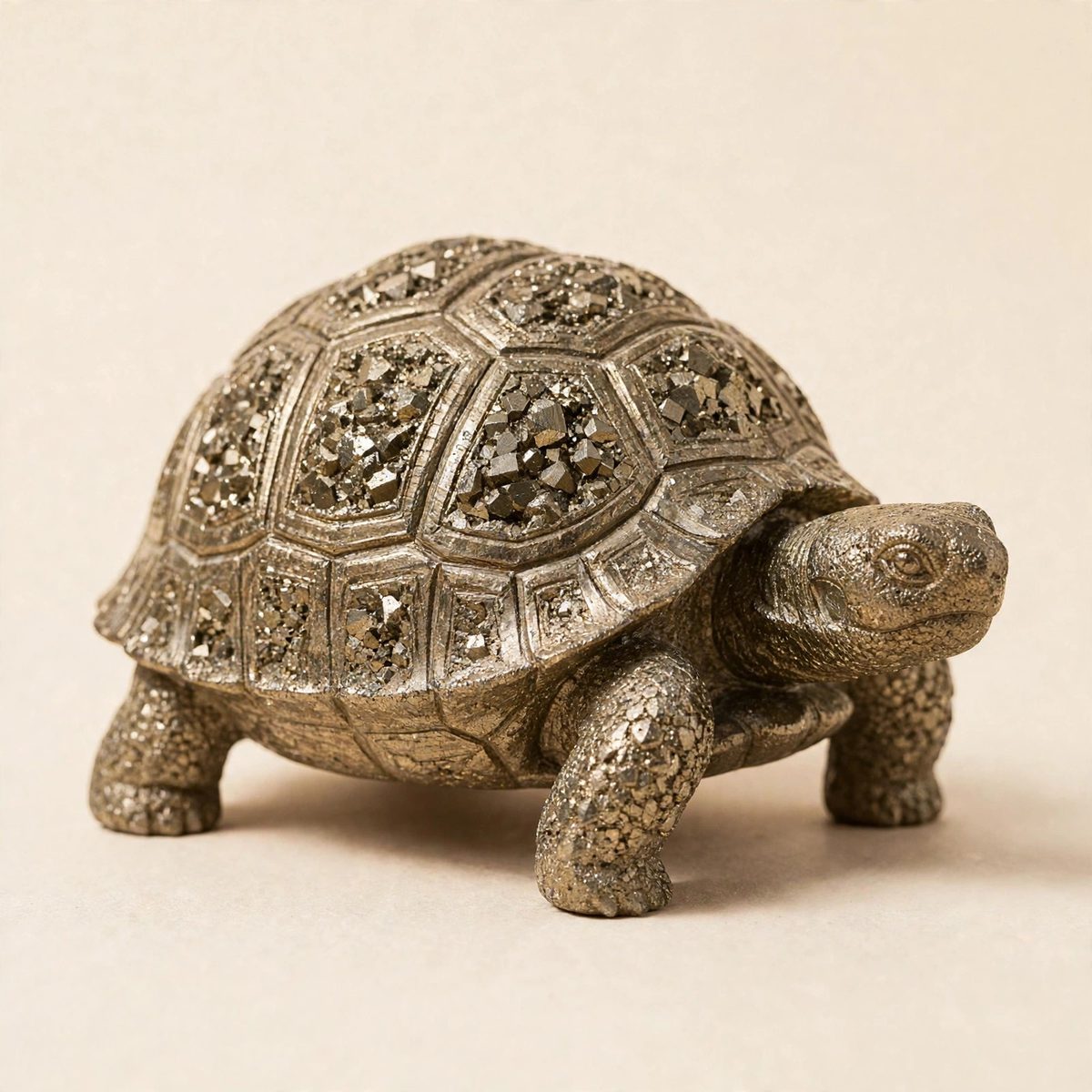
Vastu Pyrite Tortoise (Kachua)
A pyrite tortoise, traditionally placed in homes and shops as a vastu symbol.
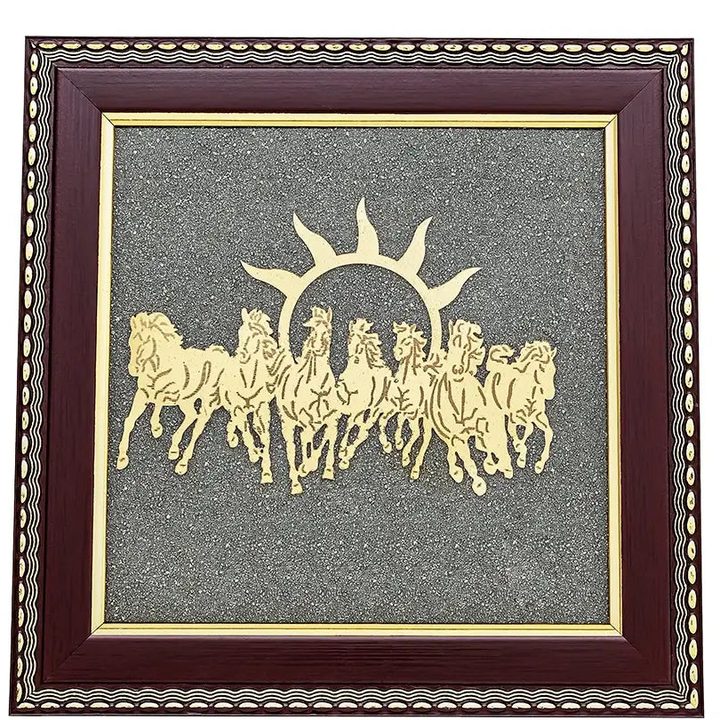
Pyrite 7 Horses Frame — 10 x 10
A framed piece of seven horses on pyrite, 10 x 10 inches, for wall or desk.
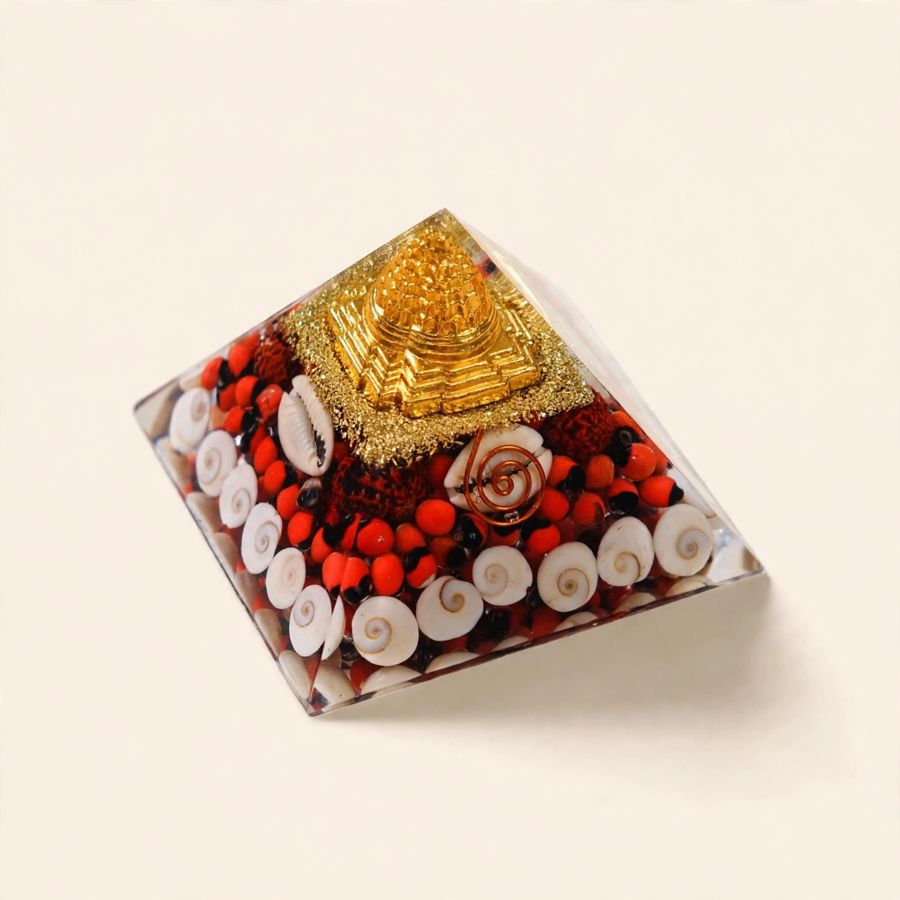
Lakshmi Wealth Orgone Pyramid
A resin orgone pyramid with red chirmi seeds, kaudi and Gomti Chakra, with a golden Shree Yantra on top.
What do buyers ask us?
Will a pyrite tortoise bring wealth or clear my debts?
No. Vastu placement is a traditional design practice, not a tested way to change income or debts, and no object can be honestly sold with that promise. The tortoise is a symbol of stability within the tradition — buy it as that, and as a well-made pyrite carving.
Can I keep it in a plate of water, like some tortoise customs?
Not this one. That custom belongs to other materials and to live symbolism; pyrite oxidises in water and damp. Keep a pyrite tortoise dry, always.
Why has my tortoise lost its shine?
Almost certainly humidity — a bathroom, kitchen steam, monsoon air, or wet cleaning. Buff it gently with a dry microfibre cloth and move it to a dry room or a closed cabinet; deep tarnish cannot be fully reversed at home.
Which way should the head point?
Tradition usually faces the head into the room from a northern position. It is a guideline within vastu practice, not a mechanism — place it thoughtfully and keep it dry, and you have done what the tradition and the mineral both ask.
Is pyrite the same as gold?
No. Pyrite is iron sulfide, brass-coloured and brittle; gold is a soft, precious metal. The resemblance is only colour — which is exactly why checking weight and surface grain matters when you buy.
The Kurma account and the tortoise's symbolism follow the standard Puranic tradition; the north-placement guideline follows common vastu practice, which varies by school and family custom, as this guide notes.
Mineral facts (iron sulfide, Mohs 6 to 6.5, oxidation in damp air) are standard mineralogy for pyrite and explain the care rules given here.
More product education on the Rudra Sacred blog. For astrology and festival guides, see the separate Astro Sacred blog at astrosacred.store.