7 Chakra Tree Guide: Stones & Placement
A 7 chakra tree is a decorative piece: about 300 crystal chips wired onto metal branches, on a natural wood base. The seven stones are matched to the seven chakras by colour — a modern crystal-practice convention, not a scriptural scheme. Choose it by size and placement, as a desk or puja-corner piece; it is not a therapy device.
| Chip count | About 300 crystal chips form the canopy of our tree |
|---|---|
| Stones | Seven stones, one colour family per chakra in the modern mapping |
| Base | A natural wood slice; the trunk is wire wrapped to look like bark |
| The mapping | Stone-to-chakra matching by colour is a modern convention of crystal practice |
| Making | Chips are wired by hand onto branches — branch shapes vary slightly |
| Care in one line | Dust with a soft brush; reshape branches gently; keep the base dry |
| Evidence note | A decorative and meditation-corner piece; no measured effect on any reader is claimed |
| If you place it | It works as | Note |
|---|---|---|
| On a work desk | A colourful focal point at the back of the desk, out of the keyboard's way | Keep it where it will not be knocked — the wire branches bend |
| In a puja or meditation corner | Part of the corner's arrangement, beside the seat or the shelf | Placement within a puja space is a personal and family custom; follow yours |
| On a living-room shelf | A decorative object that carries the seven colours into the room | Measure the shelf height first — the canopy spreads wider than the base |
| Near a shop or home entrance | A welcoming display piece on a console or counter | Keep it out of direct rain and strong sun, which fade some stones over time |
What is a chakra tree made of?
Start with the base: a slice of natural wood. Into it is set a trunk made from wire, twisted and wrapped so it reads as bark, which divides into branches. Onto the branches, makers wire small chips of crystal — hundreds of them — until the chips form a canopy. Our tree carries about 300 chips, which is what gives it its full, leafy outline.
Because the canopy is chips rather than polished beads, the stones keep their natural, slightly rough character, and because it is wired by hand, no two trees open out in exactly the same shape. The branches arrive slightly compressed from packing and are meant to be fanned out by hand — the care section below explains how.
Where does the seven-stone mapping come from?
Honestly: it is modern. The chakra system itself is old, described in yogic and tantric traditions as a set of centres in the body. But the tidy scheme that assigns one coloured stone to each chakra — red at the root rising to violet at the crown — comes from twentieth-century crystal practice, which matched stones to chakras by colour. It is not a list you will find in scripture.
That does not make the tree meaningless; it makes it a product of a living, modern tradition, bought by people who work with that colour scheme in their own practice. What it does mean is that a seller should not dress the mapping up as ancient authority.
Which stones stand for which chakra, in the modern mapping?
The conventional colour ladder runs: red stones at the root, orange at the sacral, yellow at the solar plexus, green at the heart, blue at the throat, indigo at the brow and violet or clear at the crown. A 7 chakra tree gathers chips across that ladder so the canopy reads as bands and clusters of the seven colours.
Exact stone choices vary between makers — one maker's 'yellow' chip is citrine, another's is yellow aventurine. When you compare trees, the useful questions are practical: how many chips, how full is the canopy, how solid is the base, and do the seven colour families actually appear? Our tree's page states its count of about 300 beads and its seven-stone mix in those terms.
How do you shape and care for the wire branches?
Unpack the tree and work from the trunk outward, fanning each branch gently with your fingers until the canopy opens into a rounded shape — think of arranging flowers, not bending wire sharply. Small bends are safe; a branch bent back and forth at one point will eventually snap, so shape once, then only adjust lightly.
For care: dust the canopy with a soft, dry brush every few weeks, since the chips collect dust in their grooves. Rotate the tree a quarter turn now and then if one side faces a window, so colours fade evenly. Keep the wood base dry — wipe spills at once — and do not wash the tree under a tap.
How do you check the size before you order?
Measure the space, not just the spot where the base will sit. A crystal tree's canopy spreads wider than its base and needs headroom, so measure shelf height and depth, then compare with the tree's listed size on its product page. On a desk, leave a hand's width behind the keyboard so the tree is seen but not struck daily.
If the tree is a gift, the same check applies to the recipient's likely shelf — or choose the tree for a desk, where the fit is forgiving. The product page gives the piece's dimensions so you can do this check before paying, and the tree travels packed with its branches folded in, ready to be fanned out on arrival.
Before you buy a crystal tree anywhere, ask for the chip count and the base material — 'crystal tree' listings range from under 100 chips on a resin base to full canopies on natural wood. Check that all seven colour families are actually present in the photos, and that the base is wood if the listing says wood.
Products in this guide
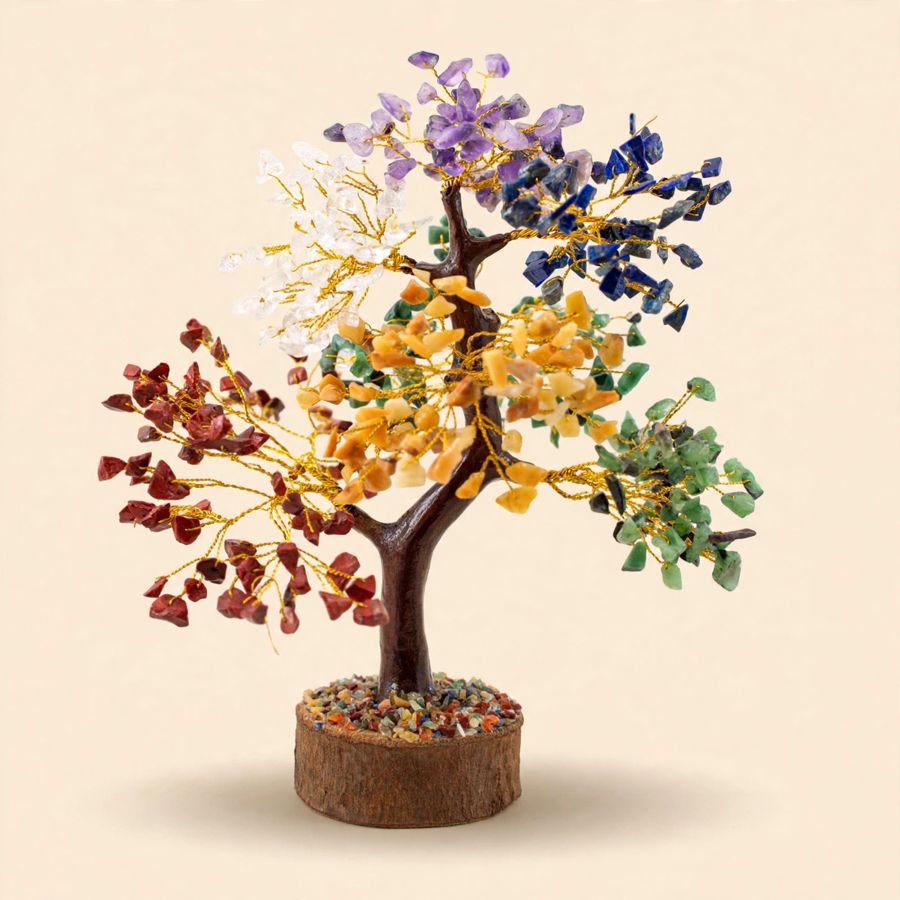
7 Chakra Tree
A crystal chip tree with stones for the seven chakras, 300 beads.
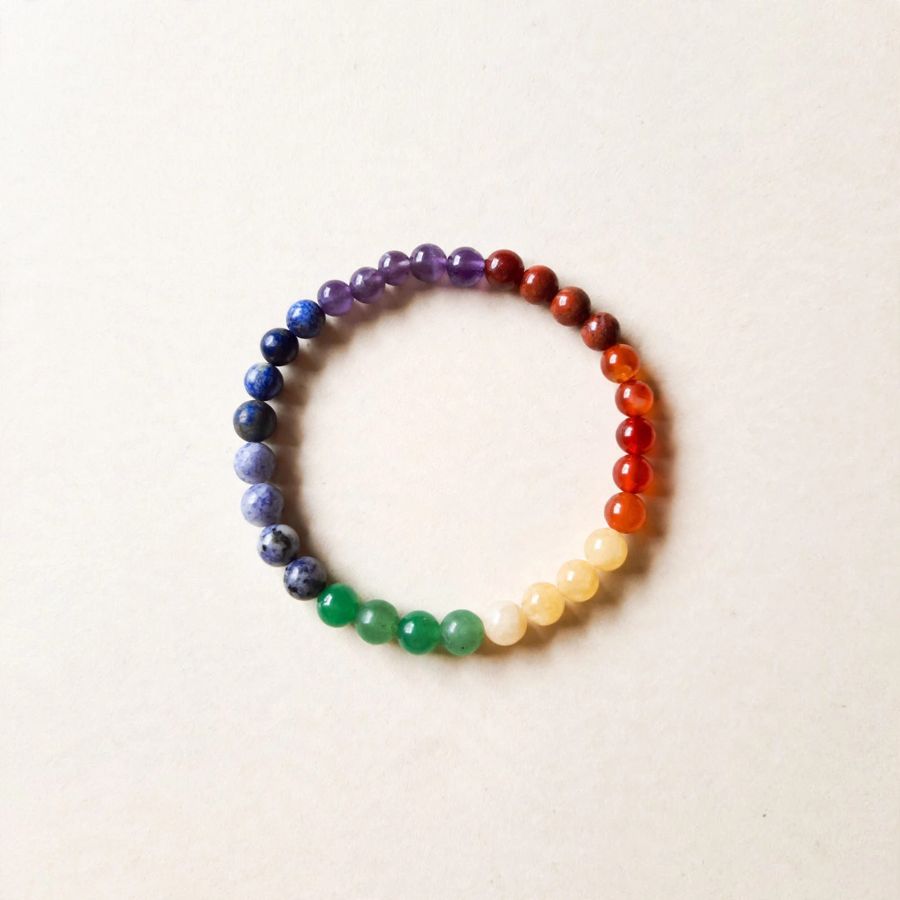
7 Chakra Bracelet — 6mm
A bracelet with seven stones, one for each chakra, in 6mm beads.
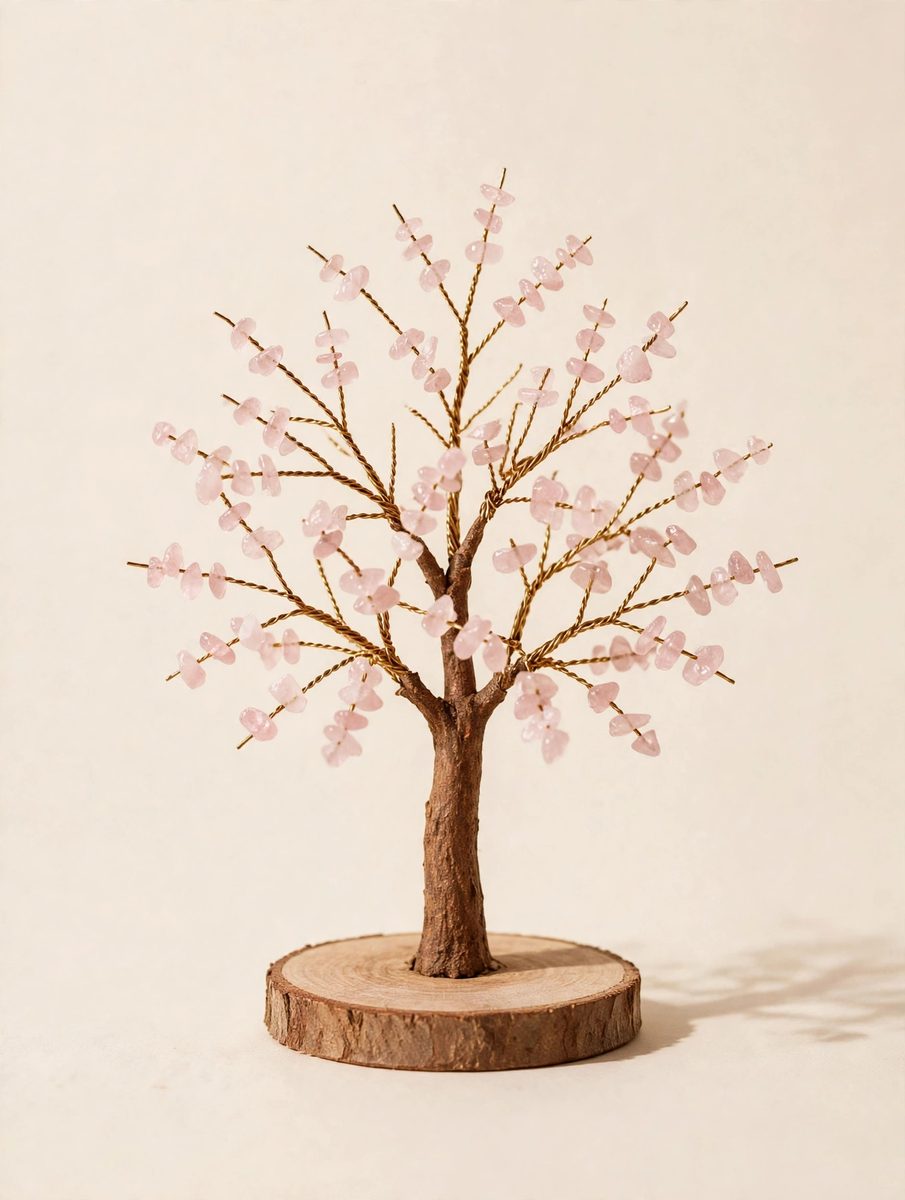
Rose Quartz Tree — 50 Beads
A small rose quartz chip tree with 50 beads.
What do buyers ask us?
Will this tree unblock my chakras or change my energy?
No such effect can be promised or measured. The tree is a decorative piece built on a modern colour tradition; people keep it as a focus in a meditation corner or as an object they enjoy looking at. Buy it on its making and appearance.
Is the stone-to-chakra mapping from the Vedas?
No. The chakra system is old, but matching one coloured stone to each chakra is a modern crystal-practice convention.
Can I keep the tree in a bedroom?
Placement is a personal choice — there is no rule in the modern tradition that forbids any room. Practically, keep it where it will not be knocked and where dusting is easy.
The branches arrived folded. Is it damaged?
No — the branches are folded in deliberately for safe packing. Fan them out gently by hand, working from the trunk outward, until the canopy opens.
How do I clean the tree?
A soft, dry brush over the canopy every few weeks. Do not wash it under a tap and keep the wood base dry; strong sun on one side for months can fade some stones, so rotate it occasionally.
The note on the mapping's history reflects the standard account: chakra doctrine is classical, while colour-matched stone lists are a twentieth-century development of crystal practice.
Construction and care details for the tree listed here — chip count, base and wiring.
More product education on the Rudra Sacred blog. For astrology and festival guides, see the separate Astro Sacred blog at astrosacred.store.